
Co-Ed Baby Shower Ideas
Direct answer: A co-ed baby shower is a celebration for both parents-to-be, with guests of all genders invited. The best co-ed baby shower ideas keep it relaxed and social: a mixed guest list built in friend groups, optional games, shareable party food, a clear drinks choice, and one short gift or toast moment.
What Is a Co-Ed Baby Shower?
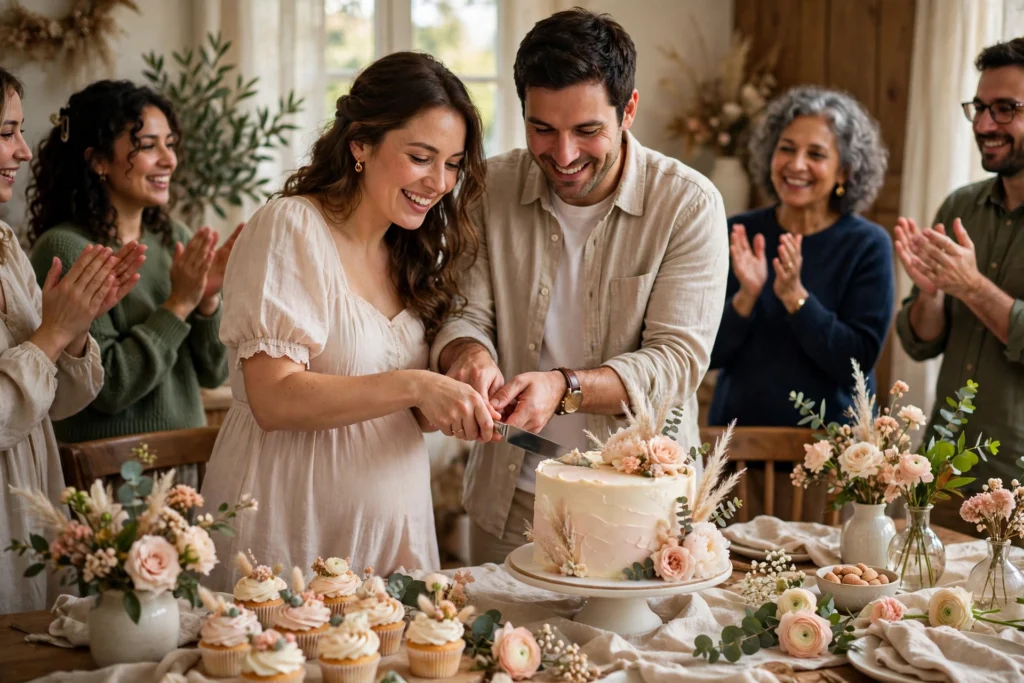
A co-ed baby shower, also called a couples baby shower or a Jack and Jill baby shower, welcomes everyone. Both parents-to-be are guests of honour, with partners, fathers, brothers, uncles, and grandfathers alongside mothers, sisters, aunts, and grandmothers. It follows the same shape as a traditional shower — food, gifts, games, and time together — but no one should feel like an extra guest.
In a traditional shower, the mum-to-be is the centre of attention. In a co-ed version, two friend groups and two families are meeting, so the best co-ed baby shower ideas focus on comfort first: food, drink, conversation, and a reason to stay.
This is not a men-only party: a man shower centres the father-to-be and his friends, while a co-ed shower brings both sides together. It is also different from a combined gender-reveal and shower, where the reveal is the main event. Start with how to plan a baby shower and the Baby Shower Planning Checklist for Hosts.
Why Choose a Co-Ed Shower?
Many couples choose a co-ed shower because a women-only list no longer fits their life: the dad-to-be has close friends and family who supported the pregnancy too, and the mum-to-be may want her partner beside her. For couples whose friends are mostly couples, a mixed list feels more natural than splitting the group in two.
A co-ed shower can also replace two separate celebrations with one, saving money and sparing the parents-to-be two parties. It is not right for every couple: good co-ed baby shower ideas work when both parents genuinely want the format, not when one partner is talked into it. If they disagree, a casual barbecue or brunch can be a middle ground.
Before you book anything, ask each parent-to-be separately what they would enjoy — who they want there, how long the party should last, and which traditions to keep or skip. Plan for the overlap both would choose.
Building the Guest List: Pods, Not One Long List
The guest list is where most co-ed showers succeed or struggle: it is built around two people and can double quickly. Start with the space and budget — see how many guests to invite and the cost ranges in how much a baby shower costs. Costs vary by US region and retailer, so treat any figure as a range.
Then build the list in pods — small groups who already know each other, such as her college friends, his work friends, or either family. Invite at least two or three people from each pod, so no one arrives alone. Check the balance first: if one side brings twenty people and the other brings four, the smaller group can feel outnumbered. Be clear about plus-ones on the invitation. Fifteen guests can be a seated lunch; forty needs stations, a buffet, and a shorter programme.
Who Hosts a Co-Ed Baby Shower?
Anyone can host — a close friend, a sibling, a group of friends, or a family member from either side. Co-hosting works well, because one host can look after each parent’s side of the room. Traditional etiquette once said close family should not host, in case it looked as though the family was collecting gifts; that rule has softened. If the parents-to-be host themselves, keep any gift request light.
Give both parents a visible role: the mum-to-be is often the centre of attention by habit, while the dad-to-be can end up at the edge of the room. Let him welcome guests with her, open gifts together, or give a short thank-you toast; if he prefers a quieter role, let him be the photographer or run the games table. See who traditionally hosts a baby shower.
Invitations: Say Clearly That Everyone Is Welcome
The invitation sets the tone: make it obvious that partners, fathers, brothers, and friends of all genders are invited. If it looks like a traditional pink-and-floral card, some guests will assume it is women-only. Use “co-ed,” “couples shower,” or “everyone is invited” on the invitation itself — for example, “Please join us for a co-ed baby shower celebrating both Emma and James.” If children are welcome, say so; if adults only, say that too, kindly.
Choose a design that reflects both parents — gender-neutral colours, a shared hobby, or a travel theme. The best baby shower invitation websites list digital and printed options, and free baby shower invitation templates keep costs down. See baby shower invitation wording, baby shower invitation etiquette, and when to send baby shower invitations.
Format, Timing, and Venue
A co-ed shower works best as a good party with a few intentional moments, not a formal programme: a drop-in open house, a brunch, or a late-afternoon snack-and-sips party lasting two to three hours, often starting a little later than a traditional shower. Check when is the best time to have a baby shower and the baby shower timeline.
Choose a venue where people can move and talk: a home or garden for a relaxed shower, or a restaurant room, community hall, or park pavilion for a larger list — see how to choose the perfect baby shower venue. Design the room around conversation: high tables, a soft seating corner, an open food table, and the gift table to one side.
Give guests at least 20 minutes to arrive, find a drink, eat something, and meet someone new before anything structured. A shower that lets people settle first feels welcoming, and the games land better.

Themes and Decor That Work for Everyone
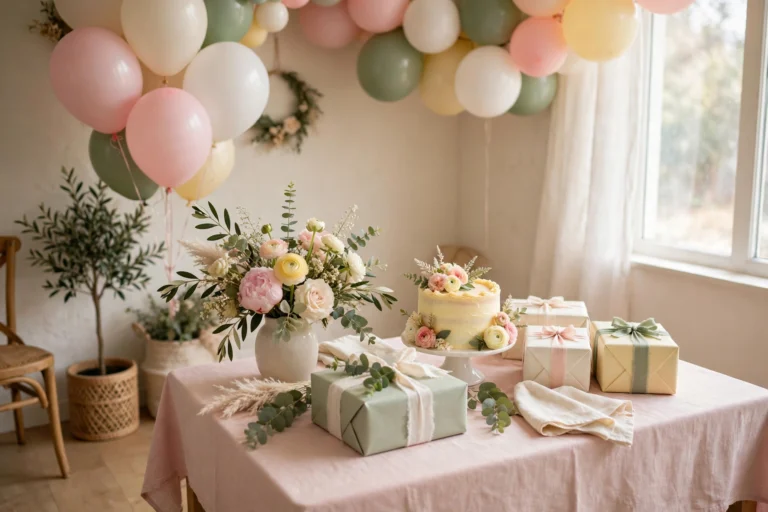
A theme helps a co-ed shower feel intentional without favouring one guest. The best co-ed baby shower ideas use shared interests, seasons, or settings: a backyard barbecue, a brunch, a woodland or safari theme, a storybook, a travel theme, or a favourite sports team. Gender-neutral colours — sage green, butter yellow, terracotta, navy and cream, or soft pastels — keep it welcoming.
Keep decor simple: a welcome sign with both parents’ names, a photo display, a balloon garland, and a dessert table are usually enough. Avoid a single throne-like chair for the mum-to-be with nowhere for her partner to sit. A photo area also works well, and a baby-photo guessing wall is a strong icebreaker.
Games for Mixed Groups: Optional, Short, and Team-Based
Games most often go wrong at a co-ed shower: mandatory games with a microphone, embarrassing forfeits, or activities that assume pregnancy knowledge will lose half the room. Make games optional and short, and choose teamwork or guessing over baby expertise. Plan two to four: one while guests arrive, one after food, and one during gift opening.
| Game style | Best co-ed picks | Why it works for mixed groups |
|---|---|---|
| Guessing | Baby photo match; Price Is Right, baby edition | Everyone can play; no pregnancy knowledge needed |
| Team race | Blindfolded diaper race; diaper-bag packing race | Fast and funny; teams mix both friend groups |
| Trivia and words | Parent trivia; dad jokes, punchlines missing | Short answers; grandparents often do well |
| Keepsake | Advice cards; baby predictions jar | Quiet and personal; a keepsake after the party |
| During gifts | Baby gift bingo | Keeps the room engaged while gifts are opened |
The baby photo match needs photos sent in advance, and the diaper race needs two dolls, two packs of nappies, and a timer. Advice cards need a clear prompt, such as “One thing we wish we had known in the first month.” Skip games that single people out, and let the parents-to-be choose whether to play, judge, or watch.
Food and Drink for Everyone
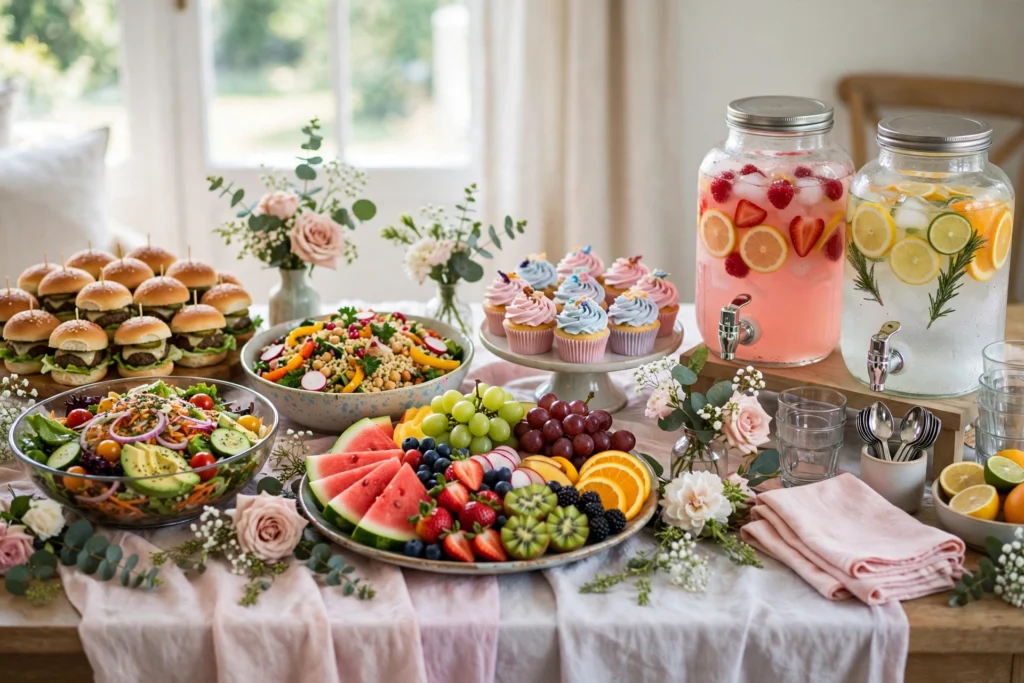
Food is where a co-ed shower most clearly differs from a traditional one. A ladies’ luncheon menu of finger sandwiches and cake can feel thin for a mixed crowd arriving hungry. Party food — shareable, filling, and easy to eat while standing — suits a co-ed shower better, and it is one of the easiest co-ed baby shower ideas to get right.
Build the menu around the time of day. Brunch: quiche, a breakfast casserole, fruit, pastries, and coffee. Lunch or afternoon: a taco or nacho bar, sliders, pulled pork or chicken, pasta, or a barbecue, so guests can build their own plate. Evening: a grazing table plus one warm dish. Include vegetarian, vegan, and gluten-free options, labelled clearly, and ask about allergies on the RSVP.
Drinks need the same care: one signature mocktail for the mum-to-be, plus sparkling water with citrus, lemonade, iced tea, and coffee. For other adults, beer, wine, or a simple cocktail can be offered where appropriate and legal, with plenty of non-alcoholic choice alongside. A self-serve drink bar works well, and a separate jug of juice suits children.
Name the signature mocktail after the baby’s nickname or the couple, serve it in the prettiest glasses, and put it at the front of the drink table. When the non-alcoholic drink looks like the special one, the mum-to-be does not feel left out.
Gifts and the Registry Moment
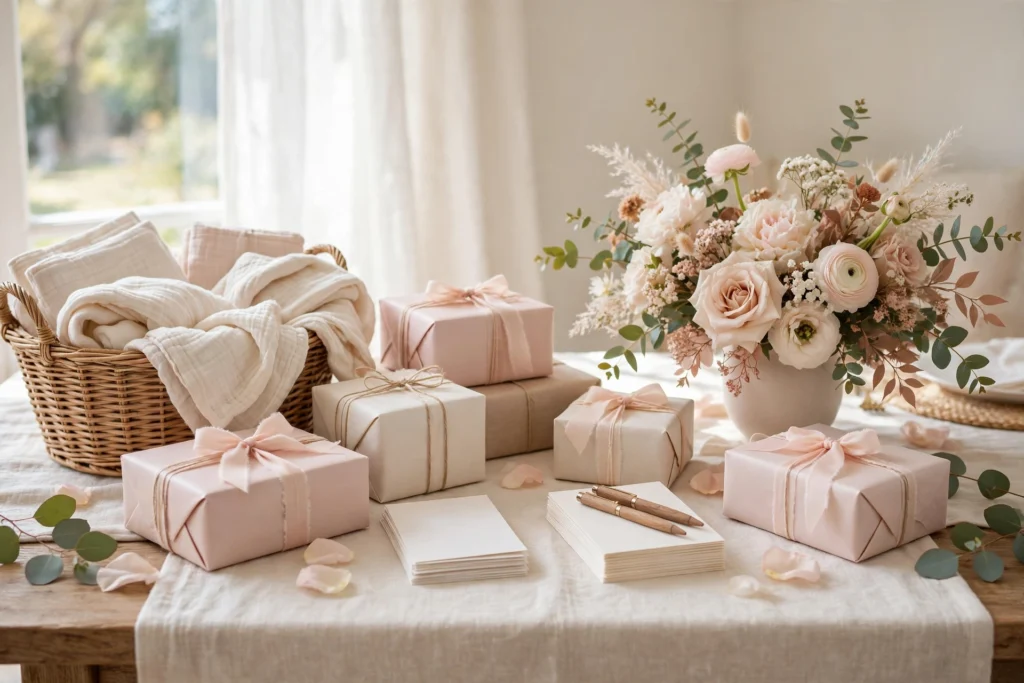
Gifts at a co-ed shower help the parents prepare for the baby, just as at any shower. The difference is the mix of guests: some will know what to buy, while others — especially friends of the dad-to-be who have never bought baby gear — will need guidance. A clear registry solves that problem; share it once, in a small note on the invitation, with a range of prices.
See the best baby shower gifts for first-time parents, practical baby shower gifts new parents actually use, and unique baby shower gift ideas beyond clothes and toys. For tighter budgets, affordable baby shower gifts under $50 and group baby shower gift ideas help — friends can chip in for a stroller, car seat, or crib.
Keep the gift moment contained: open gifts together for about twenty minutes, or skip opening, display unwrapped gifts on a table, and end with a short thank-you toast from both parents. A diaper raffle is a simple addition — guests who bring nappies get a ticket, drawn for a small prize; say so on the invitation.
Etiquette: Plus-Ones, Kids, and Awkward Questions
Etiquette is mostly about being clear early. Plus-ones: decide the rule before invitations go out and apply it fairly — simplest is that every guest may bring a partner. If space or budget does not allow that, limit plus-ones to married, engaged, or long-term partners, and name the partner where you know their name.
Kids: there is no single right answer. Many couples welcome children, because excluding them would exclude their parents; others prefer an adults-only party. If children are welcome, say so and plan a small kids’ table with colouring pages and juice boxes. If adults only, say so kindly and give parents notice for childcare.
Second showers and who pays: a co-ed shower can be the couple’s only shower, or one of two — a family shower and a friends’ shower — as long as the same guests are not asked to bring a gift to both. Usually the host or co-hosts pay; agree the split in writing. Guests who cannot attend are not required to send a gift, though a card is always welcome.
Nothing causes more hurt feelings than a guest told children are welcome, then told at the last minute they are not — or a partner invited, then uninvited. Decide before invitations go out, write the rule on the invitation, and keep it the same for everyone.

Budget, Timeline, and a Simple Run of Show
A co-ed shower usually costs more than a traditional one because the list is larger. A home or garden party with a buffet, a homemade cake, and digital invitations can cost far less than a restaurant booking. Use the ranges in how much a baby shower costs as a starting point; costs vary by US region and retailer.
A simple timeline keeps planning calm: eight weeks out, agree the date, guest list limit, and budget; six weeks out, book the venue; four to six weeks out, send invitations; two weeks out, confirm RSVPs and order the cake; in the final week, buy fresh food and prepare the games — see the full baby shower timeline. On the day, try: thirty minutes for arrivals; forty-five for the meal and one toast; twenty for one game and advice cards; twenty for gifts or a thank-you toast, plus cake; thirty minutes of open time.
Favours, Thank-Yous, and Final Thought
Favours should suit everyone: a jar of local honey, a small candle, a packet of seeds, a box of chocolates, or a mini succulent. See personalized baby shower gifts that make lasting memories for personalised ideas, but keep them simple and affordable for a large list, placed by the exit with a short thank-you tag from both parents.
Send thank-you notes within two to three weeks, mention the gift by name, and have both parents sign — see baby shower thank-you card wording. The best co-ed baby shower ideas are not the most elaborate: build the guest list in pods, keep games optional and short, serve food and drinks everyone can enjoy, and keep the gift moment brief. See how to plan a baby shower, what to buy when parents already have everything, and the best baby shower gift basket ideas.
Frequently Asked Questions
What is a co-ed baby shower?
A co-ed baby shower is a baby shower for both parents-to-be, with guests of all genders invited. Like a traditional shower it includes food, gifts, games, and time together, but the guest list, activities, and menu are planned so everyone feels welcome.
Who should host a co-ed baby shower?
Anyone can host — a close friend, a sibling, a group of friends, or a family member from either side. Co-hosting works well, with one host looking after each parent’s side of the room.
What games work best for a co-ed baby shower?
Trivia, price-guessing games, baby photo matching, team races such as blindfolded diaper changing, and advice cards work best. Keep games optional, short, and team-based — two to four for a two-to-three-hour party.
What food should you serve at a co-ed baby shower?
Serve shareable party food: a taco or nacho bar, sliders, barbecue, pasta, or a grazing table, with vegetarian, vegan, and gluten-free options labelled clearly. Offer a signature mocktail, sparkling water, lemonade, iced tea, and coffee, plus beer or wine for other adults where appropriate.
Are kids and plus-ones invited to a co-ed baby shower?
It depends on the couple’s choice. Decide before invitations go out, write the rule plainly on the invitation, and apply it fairly. If children are welcome, plan a small kids’ area; if adults only, say so kindly and give parents time to arrange childcare.