
How to Plan a Baby Shower Step by Step
Direct answer: A baby shower is usually held 4–8 weeks before the due date, around weeks 28–32 of pregnancy, when the parent-to-be can still enjoy it comfortably. Start planning 8–12 weeks ahead, agree the budget and who pays first, then lock the guest list, venue and date.
Planning a baby shower sounds simple until you are holding the list. Dates clash, the guest list grows, and nobody has agreed a budget. This guide gives you one clear order, so you spend less time worrying and more time creating a day the parent-to-be will enjoy.
Step 1: Start With the Parent-to-Be, Not the Decorations
Before you browse a single balloon garland, have one honest conversation with the parent-to-be. This step prevents the most awkward surprises later. Ask, and write the answers down: Do you want a shower, and who would you love to have there? Surprise or not? Any food restrictions or allergies? How do you feel about games, gift opening in front of everyone, and photos shared online? Is there a registry, or should one be created before invitations go out? Are there accessibility needs, such as step-free access, nearby parking, or a comfortable seat with a nearby restroom?
A shower built around the guest of honor feels warm even with simple decorations. If it is a surprise, ask a close friend or family member to answer on their behalf.
Text the parent-to-be five questions: date range, guest count, home or venue, games yes or no, and gift opening yes or no. Those answers are your real planning brief. When a later choice feels stuck, return to them instead of to a Pinterest board.

Step 2: Agree the Host Team and Who Pays — Before Spending Anything
Traditionally, a friend or family member hosts and pays, but co-hosting and shared contributions are now common across the US. There is no single correct model, only one rule: agree it in writing before anyone spends money.
| Hosting model | Who usually pays | Best for |
|---|---|---|
| One host | The host covers venue, food, decor, games and favors | Small showers, one decision-maker |
| Co-hosts split equally | 2–4 hosts split the total evenly | Friends or sisters sharing work and cost |
| Co-hosts split by task | Each host owns a category, such as food or decor | Hosts with different strengths and budgets |
| Parent-to-be hosts | The parents pay and plan it themselves | Small showers where parents want full control |
Use a shared note to track every expense and who paid. Set one total budget cap first, then divide it by category. If a co-host cannot afford an equal split, agree task-based shares instead. Also decide early whether the host will buy a separate gift; if the host is already covering the party, a heartfelt card and small keepsake are reasonable.
Pick your total first and let that number choose the venue and menu. Hosts who pick a venue first and check the budget later are the ones who overspend. A running total, updated after every purchase, keeps the whole team honest.
Step 3: Choose the Date and Timing
Most US showers are held around 28–32 weeks of pregnancy, about 4–8 weeks before the due date. That window works for a practical reason: the parent-to-be is usually comfortable enough to enjoy a two- to three-hour party, and there is still time afterward to sort gifts, wash clothes, and set up the nursery. But the best date is always the one that fits this family:
| Situation | Timing that often works better |
|---|---|
| Standard shower, local guests | 28–32 weeks, 4–8 weeks before the due date |
| Guests traveling long distances | Slightly earlier, so travel and gift shipping are easier |
| Multiples or higher chance of early arrival | Earlier, often around 24–28 weeks |
| Holiday or busy family season | A week or two away from major holidays |
| Parent-to-be prefers celebrating after birth | A sip-and-see a few weeks after birth |
Weekend late mornings and afternoons suit most guests and keep food costs lower than dinner. Check for clashes before booking anything non-refundable. See when is the best time to have a baby shower.
Step 4: Set a Realistic Budget
Do not chase one fixed national average: prices vary widely by US region, guest count, venue, and food style. Venue and food are almost always the two biggest costs. A home shower removes venue rental entirely, while a rented hall adds rental and sometimes a minimum spend, and catered food costs more per guest than homemade finger foods.
| Shower style | Planning range (varies by US region) |
|---|---|
| Small home shower, homemade food | Lower range; venue cost is zero |
| Mid-size home or community space shower | Moderate range; food and decor lead the spend |
| Rented venue or restaurant shower | Higher range; venue and catering lead the spend |
| Virtual shower | Lowest range; mainly favors and mailed treats |
For a full breakdown, read how much does a baby shower cost.
Where not to cut corners
Protect three things even on a tight budget. First, enough food and drink: running out is the mistake guests remember, so plan generous finger-food quantities plus water, a mocktail, and a non-caffeinated option. Second, seating and comfort: every guest needs a real seat, and the parent-to-be needs the most comfortable chair, with shade if outdoors and easy restroom access. Third, thank-yous: budget for cards and postage, and keep a gift log on the day so notes are easy later. Save instead by reusing decor, choosing one focal point such as a balloon arch or dessert table, using digital invitations, and keeping favors small and useful.

Step 5: Build the Guest List and Choose the Venue Together
Guest list and venue must be decided together, because each limits the other. A home that seats 20 cannot host 45 guests without a different food and seating plan, and a hall booked for 60 feels empty with 15 guests. Start with the parent-to-be’s list, collect a full name and address for each guest, and decide early whether children, partners, and coworkers are invited.
Home showers work best for about 15–30 guests. Beyond that, seating, kitchen capacity, parking, and restrooms become constraints. A community hall or restaurant room suits larger lists, but check capacity, kitchen access, setup time, and cleanup rules. See how to choose the perfect baby shower venue and how many guests should you invite to a baby shower.
Never book a venue before you have at least a rough guest count. A rough count within 10 guests is enough to book confidently; the final count can follow after RSVPs close.
Step 6: Pick a Theme That Makes Decisions Easier
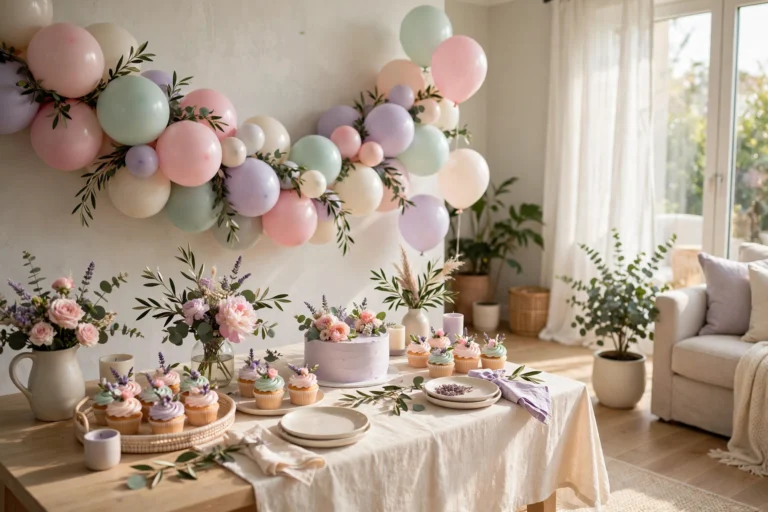
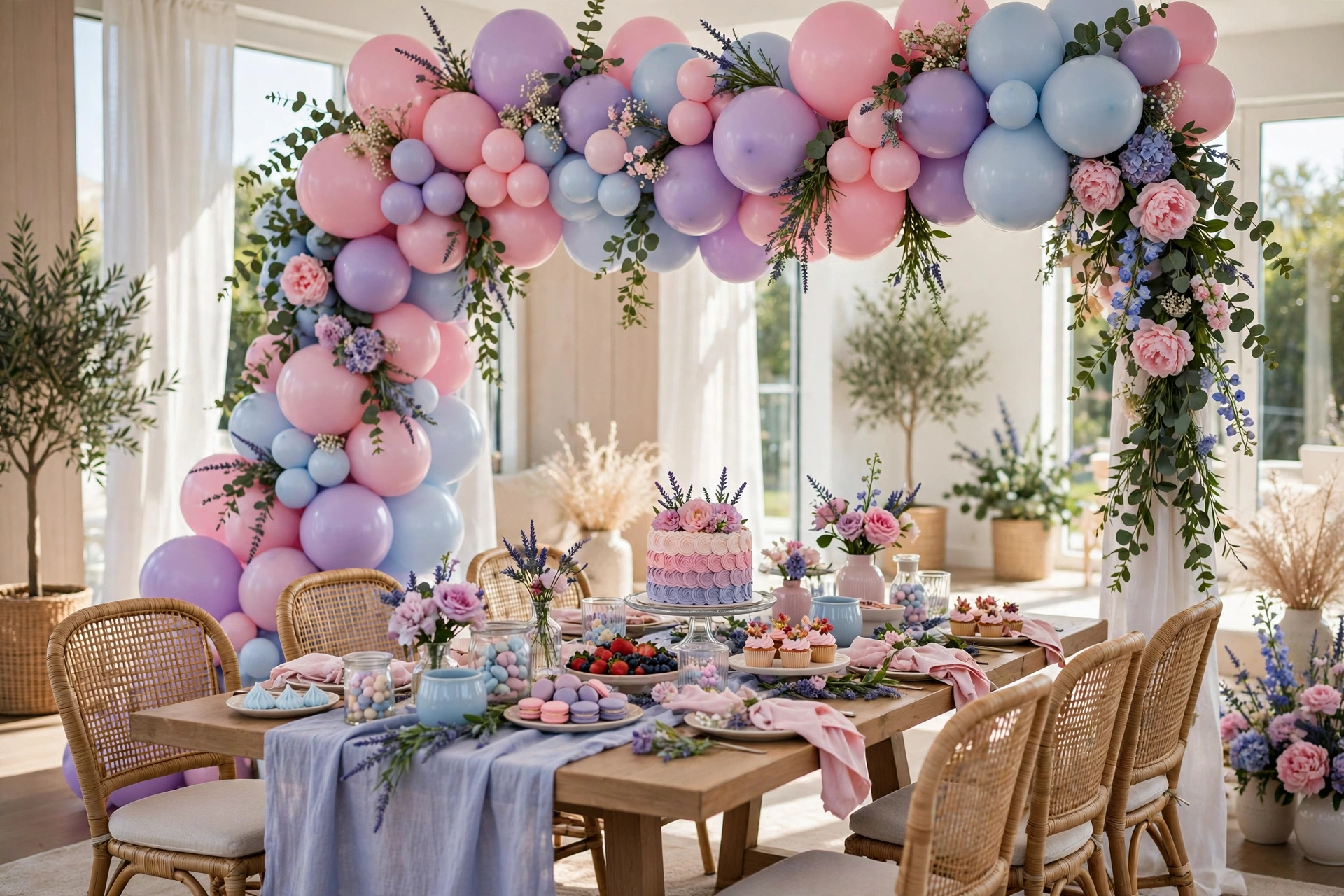
A good theme makes later choices faster: invitations, colors, food, games, and favors all follow from it. Pick one the parent-to-be loves, not just one that photographs well. Garden party, storybook, woodland, tea party, and classic pastel all work flexibly, and gender-neutral palettes suit families keeping the baby’s sex a surprise.
Keep decor focused: one welcome sign, one focal backdrop or balloon arch, and a dessert table create a complete look. Two or three colors, repeated consistently, look more polished than ten colors used once each.
Step 7: Invitations, Registry, and RSVPs
Send invitations 4–6 weeks before the shower, sooner if guests must travel or the date falls near a holiday. Every invitation should include the parent-to-be’s name, host name, date, start and end time, address with parking notes, RSVP deadline, and registry information. The registry should be ready before invitations go out, with a range of price points.
Set the RSVP deadline about two weeks before the shower, leaving time to chase non-responders politely and confirm the final headcount. For wording and format help, see baby shower invitation wording examples, baby shower invitation etiquette, and digital vs printed baby shower invitations.
Step 8: Menu, Games, Favors, and Shopping List
Menu. Most showers are brunch or afternoon events, so light food works best: finger sandwiches, quiche, fruit platters, salads, sliders, cupcakes, and a mocktail. Ask about dietary needs, label dishes clearly, and shop for perishables last.
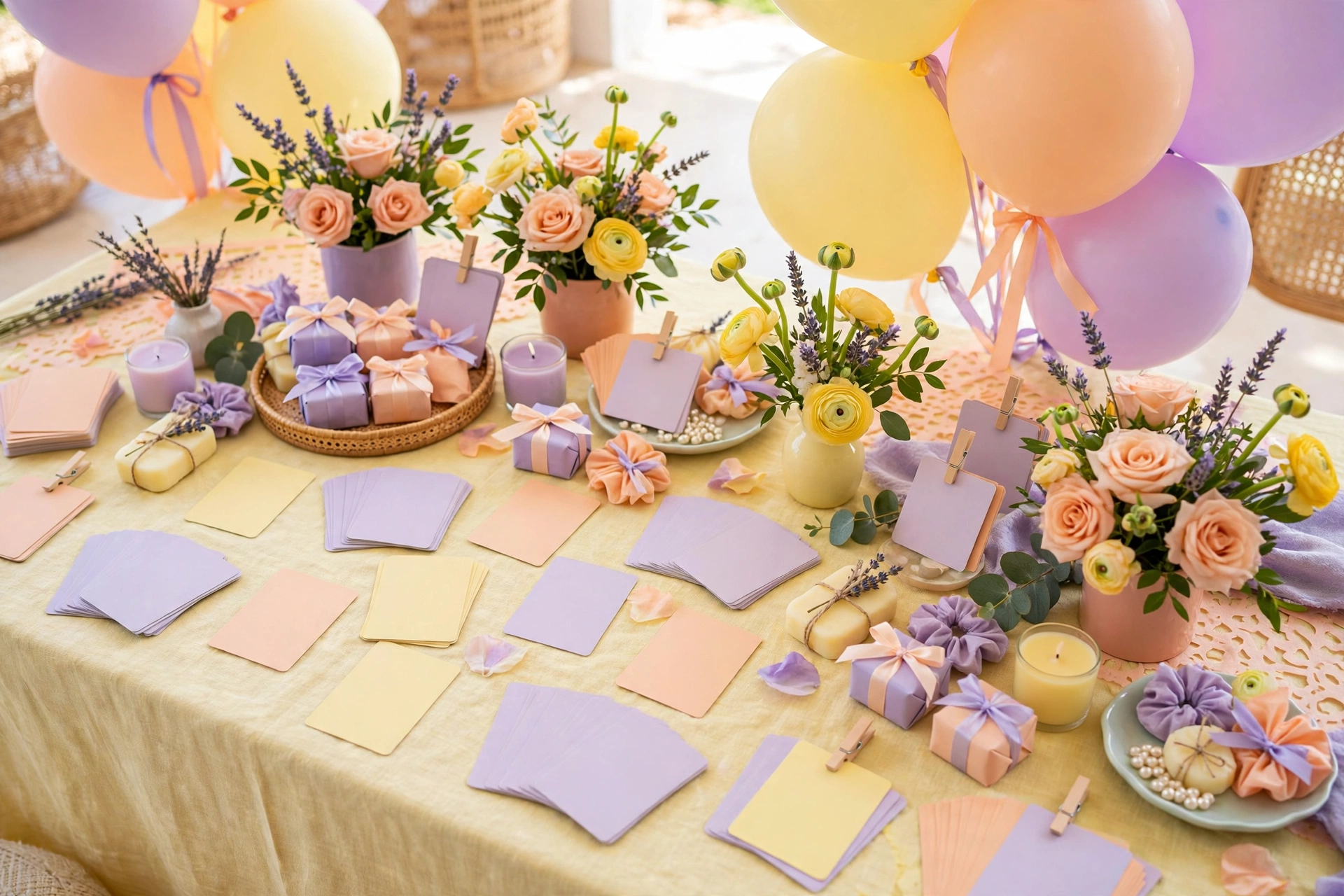
Games. Two to three games are the sweet spot. Choose short, inclusive games — baby bingo, a prediction card, a quiz about the parents — or a wishes station or memory book for guests who prefer not to perform.
Favors. Keep them small and useful: mini candles, seed packets, cookies, or tea bags. Prepare them a week ahead, count against the final headcount plus spares, and place them near the exit.
Shopping list. Keep one master list divided into decor, tableware, food, drinks, games, favors, and day-of supplies. One list prevents duplicate purchases by co-hosts.
Step 9: The Day-Of Run of Show
Most showers last two to three hours. A simple run of show keeps the day relaxed:
| Time | What happens |
|---|---|
| 2 hours before | Hosts arrive; set up tables, decor, gift table, card box, food stations |
| 30 minutes before | Cake and ice collected, drinks chilled, music on, photographer briefed |
| 0:00–0:20 | Guests arrive, mingle, sign guest book or wishes station |
| 0:20–0:30 | Welcome and a short word about the parent-to-be |
| 0:30–1:00 | Food and drinks, relaxed conversation |
| 1:00–1:30 | One or two games or a group activity |
| 1:30–2:15 | Gift opening, if wanted, with a gift log |
| 2:15–2:30 | Cake, favors, photos, and goodbyes |
Assign day-of jobs before the party: one person keeps the gift log, one takes photos, one manages the kitchen, and one leads cleanup. Plan gift transport in advance too: large bags and a car with enough space.
Provide a comfortable chair, water within reach, a quiet corner for a break, and a clear end time. End while everyone is still happy, rather than letting a lovely party drag until the guest of honor is exhausted.

Step 10: After the Shower
Within a few days, share photos through a shared album, return borrowed items, and confirm all gifts reached the parent-to-be safely. Thank-you notes should go out within a few weeks, each naming the gift and thanking the giver personally. See baby shower thank-you card wording. Thank co-hosts and helpers too.
Common Mistakes to Avoid
- Booking a venue before agreeing the guest count and budget.
- Sending invitations before the registry is ready.
- Planning eight games for a two-hour party.
- Forgetting dietary needs, seating, parking, and restroom access.
- Leaving gift transport, gift logging, and cleanup unassigned.
- Spending the whole budget on decor and running short on food.
- Assuming RSVPs will arrive without a friendly follow-up.
Use our full host checklist alongside this guide: complete baby shower planning checklist for hosts.
Frequently Asked Questions
How far in advance should you plan a baby shower?
Start 8–12 weeks before the shower date. That leaves time to agree the budget, book a venue, build the guest list, and send invitations 4–6 weeks out. With only four weeks, combine the first decisions into one week and choose a home venue with simple food.
Who usually pays for a baby shower?
Traditionally the host pays, but co-hosts commonly split costs equally or by task, and family often contributes. The parent-to-be is not expected to pay for a shower thrown in their honor, although parents who host their own small shower do pay for it themselves. Agree the model before spending.
Is it okay for the mom-to-be to host her own baby shower?
Yes. Self-hosting is increasingly common, especially for small, intimate showers, and gives the parents full control over guest list and budget. Friends or family can still help with setup or a dish without taking over.
How long should a baby shower last?
Most showers last two to three hours. Two hours suits brunch with food, one or two games, and gift opening. Three hours works for larger lists or a sit-down meal. A clear end time helps guests plan travel and childcare.
What if guests need to travel to the shower?
Send invitations earlier, ideally six weeks out, include parking and hotel notes, and consider a slightly earlier date. A virtual option for guests who cannot travel keeps everyone included without pressure.
How many games should you plan?
Two to three games are ideal. Choose short, inclusive games and leave plenty of time for conversation, food, and gift opening. If the parent-to-be dislikes games, use a wishes station or memory book instead.
What if the shower date is very late, around 35–37 weeks?
Keep it small, local, and short, with a comfortable venue close to home and simple food. Have a backup plan if the parent-to-be needs to rest, and consider a post-birth sip-and-see as a warm alternative.