How to Organize a Baby Shower Trivia Game
Direct answer: To organize a baby shower trivia game, prepare 10 to 15 questions in three short rounds and split guests into teams of three or four. Score one point per correct answer on a visible scoreboard, read a fun fact after each reveal, and finish with a tiebreaker and a small prize. The whole game takes about 15 to 20 minutes.
A baby shower trivia game is the rare shower activity that works for almost everyone in the room. Nobody has to stand up, perform, or know anything about babies to enjoy it — grandparents, coworkers, and friends who have never held a newborn can all play on equal footing, as long as the host organizes it well.
The difference between a trivia game guests remember fondly and one they endure politely is almost never the questions themselves. It is the structure: how many questions, how the teams are formed, how scoring works, and how the host keeps the energy moving. This guide covers each decision in order, with only a few short example questions to show each type.
Step 1: Choose Your Format First
Before you write a single question, decide how the game will be played. The format decides how many questions you need, what supplies to prepare, and how long the game takes. Most baby shower trivia games use one of three formats.
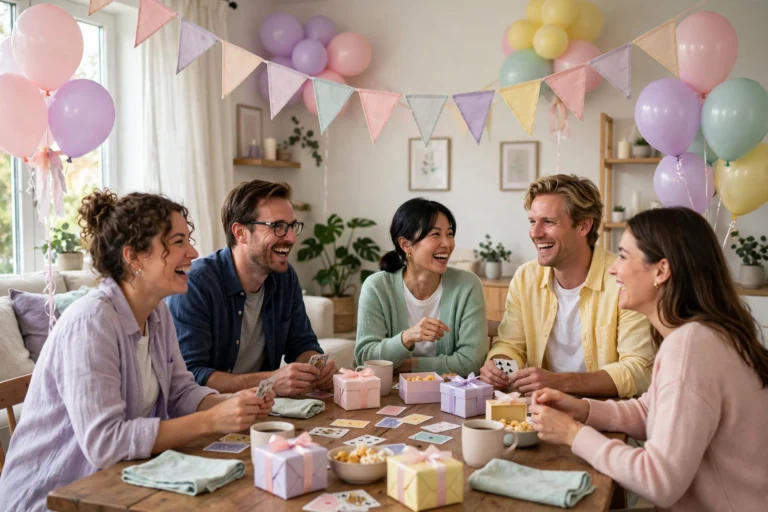
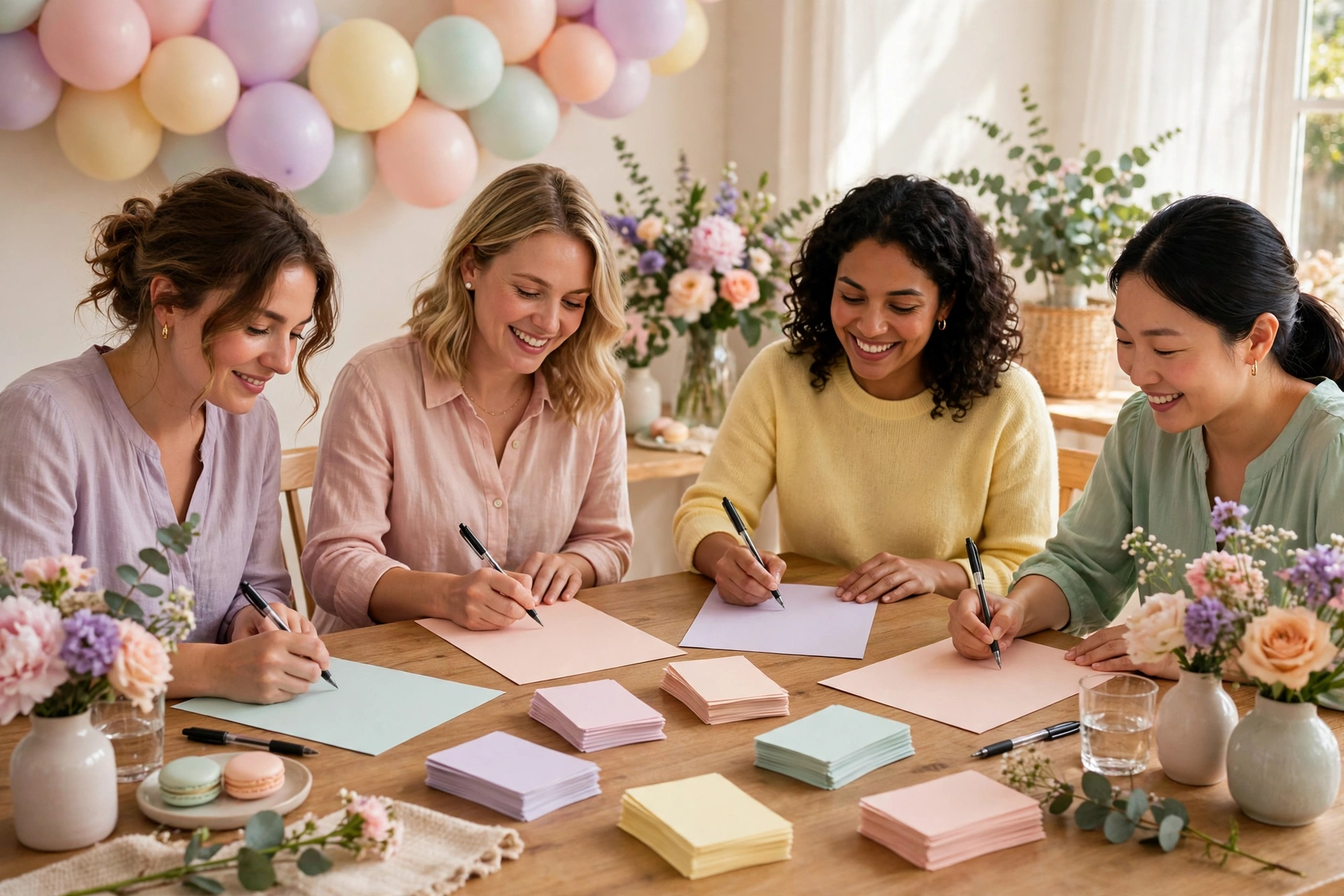
The written sheet format is the simplest and most reliable: print one answer sheet per team, read each question aloud, and give teams 20 to 30 seconds to write an answer. At the end, swap sheets between teams for marking. It needs no special equipment and suits almost any shower — if you are hosting for the first time, choose this one. The buzzer format suits a small, lively crowd of 8 to 15 guests, but it favours the loudest guests, so a wrong answer should pass to the next team. The screen format works best for large or virtual showers, and slides can match a unique baby shower theme. Always keep printed questions as a backup.
A buzzer game looks exciting in photos but falls flat in a quiet room of 30 guests who barely know each other. A written sheet looks plain but works everywhere. Choose the format your guests will enjoy.
Step 2: How Many Questions and How Many Rounds?
The most common mistake is writing too many questions. A game that drags on for 40 minutes stops being fun, however good the questions are. The sweet spot is 10 to 15 questions in about 10 to 20 minutes, including the reveals. Fewer than 10 ends before the room warms up; more than 20 and guests start checking their phones.
Three short rounds beat one long list: they give the game rhythm, let you change question style, and let a team behind after round one still win round three. Try five questions per round, three rounds, with a short pause between rounds for score updates — or two rounds of five if time is tight. Allow roughly 45 seconds to one minute per question: 10 seconds to read it, 20 to 30 seconds to discuss and write, and 10 to 15 seconds for the reveal. Play after food and before gifts, when guests are settled. Our baby shower timeline shows where games fit, and how many guests should you invite to a baby shower helps with team sizes.
| Guest count | Best format | Questions | Playing time |
|---|---|---|---|
| 6–10 guests | Individuals or pairs | 10 questions, 2 rounds | About 10 minutes |
| 11–20 guests | Teams of 3–4, sheets | 15 questions, 3 rounds | About 15 minutes |
| 21–35 guests | Teams of 4–5, sheets or screen | 15 questions, 3 rounds | 15–20 minutes |
| 36+ guests | Teams by table, screen | 15 questions, 3 rounds | About 20 minutes |
| Virtual shower | Screen share, chat answers | 10 questions, 2 rounds | About 10 minutes |
Step 3: Writing Good Questions
Good trivia questions are short, clear, and fair: one correct answer, answerable in under 30 seconds. If two reasonable people could argue about it, rewrite it or drop it. Test every question on one friend first.
Mix the difficulty: about half easy, a third medium, only a few hard. Easy questions build confidence, medium ones separate the teams, hard ones create the drama. Mix the categories too — baby facts, questions about the parents, general knowledge, and fun questions — so guests who have never changed a nappy can still score.
Here are a few short examples of each type — examples, not a list to copy.
- Easy, baby facts: “What is a baby kangaroo called?” (A joey.) Short and friendly.
- Medium, baby facts: “How many bones is a newborn baby born with?” (Around 300, which later fuse into 206.) Give three multiple-choice options, so guests can guess.
- Easy, parents trivia: “What was the mum-to-be’s favourite childhood book?” Guests love personal questions — but only the parents can supply the answers.
- Medium, general knowledge: “Which children’s book features a caterpillar who eats his way through the week?” (The Very Hungry Caterpillar.) General knowledge levels the field.
- Hard, fun round: “True or false: babies are born with a moustache-like layer of fine hair?” (True — it is called lanugo.) Save one surprising true-or-false question for the final round.
Offer multiple choice for hard questions — three options turn a blank stare into a guess. Keep the answer key separate from the guest sheets.
After every reveal, read one short fun fact — for example, that newborns have around 300 bones. The answer settles the point, but the fact gives the room something to react to.
Step 4: Forming Teams
Teams make the game social. With three or four per team, guests who came alone are never left guessing in silence, and shy guests can whisper an answer instead of shouting it. Two is too few for debate, and six or more means someone never gets a word in.
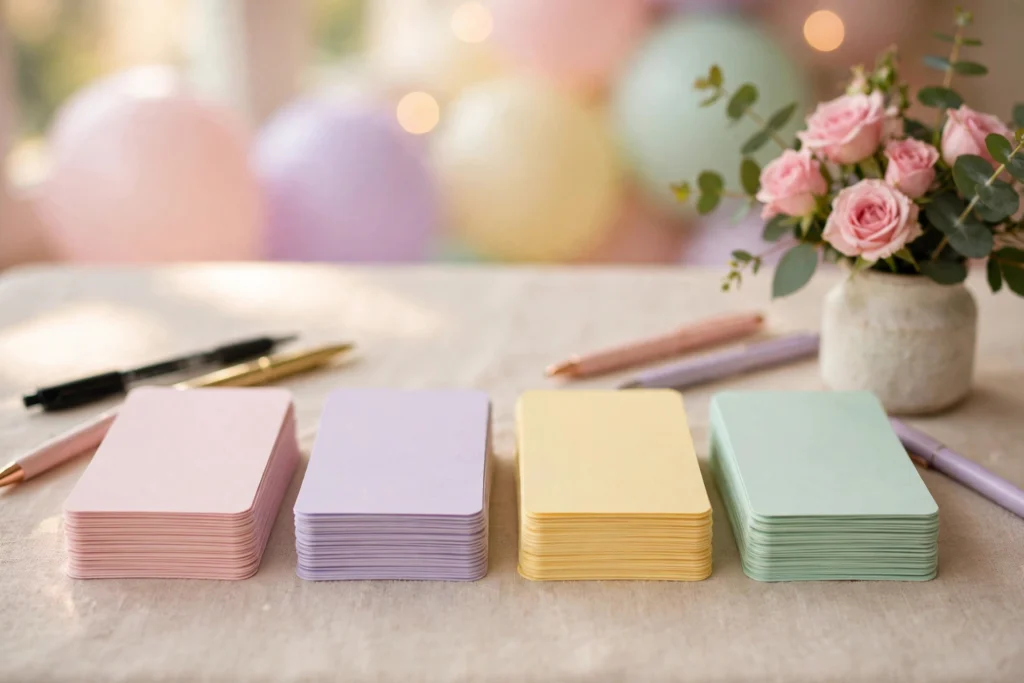
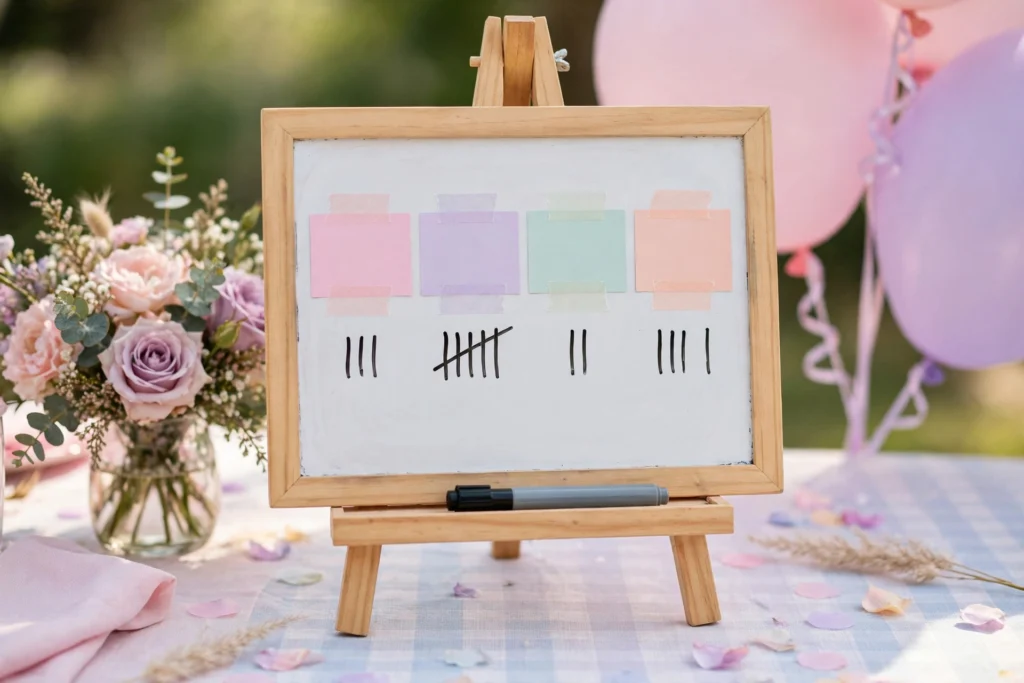
Mix the teams deliberately: blend relatives, friends, and coworkers, because each brings different knowledge — a grandmother knows the nursery rhymes, a coworker knows the pop culture, a friend knows the parents trivia. Letting guests choose their own teams usually produces one table of close friends and one of strangers. Instead, put a coloured card under each chair; everyone with the same colour is a team. Give each team a name — the table colour works (Team Blush, Team Lavender, Team Mint). Decide the guest of honour’s role in advance: many hosts make the mum-to-be the judge, giving the final say on disputed answers. If she would rather play, put her on a team and let someone else host.
Step 5: Scoring That Everyone Trusts
Simple scoring is fair scoring: one point per correct answer, with a running total where everyone can see it — a whiteboard, a large sheet of paper, or a slide on the screen. Visible scores keep the last round tense and stop the end-of-game argument about who won. If you want to reward difficulty, give easy questions one point, medium two, and hard three — but say so before the game starts. Never deduct points for wrong answers: it punishes guessing, and guessing keeps a mixed crowd playing.
Decide your tiebreaker before the game — ties are common. Use a numeric “closest guess wins” question, such as “How many nappies does a newborn go through in a day?” Keep one spare; improvising in front of a tied room turns a celebration into a debate. If the tie holds, declare a shared win. For marking, swap answer sheets between teams while you read out the answers. For a buzzer game, appoint a scorekeeper who is not the host.
You do not need to buy a scoreboard: a large sheet of paper, a picture frame used as a whiteboard, or a slide on a laptop all work. Spend your budget on prizes, not equipment.
Step 6: Running the Rounds on the Day
Explain the rules in under a minute: rounds, how teams answer, scoring, and the prize. Read each question twice, then give a short answer window with a five-second countdown (“Five, four, three, two, one — pens down”). Without a timer the room deliberates and the game dies. Lock answers before the reveal, and give one point to every team that got it right.
Keep the pace brisk: announce scores after each round, praise a clever wrong answer as well as a right one, and keep the reveals moving. If the room is flagging, skip a question and go to the fun final round. Pack a host kit before guests arrive: question sheets, a separate answer key, pens, a timer, the scoreboard and marker, the tiebreaker, and the prizes by your chair. Rehearse the first round out loud once the night before — one rehearsal removes most hosting nerves. If the questions prove too hard, switch the rest to multiple choice rather than pushing on.
Step 7: Choosing Prizes Guests Actually Want
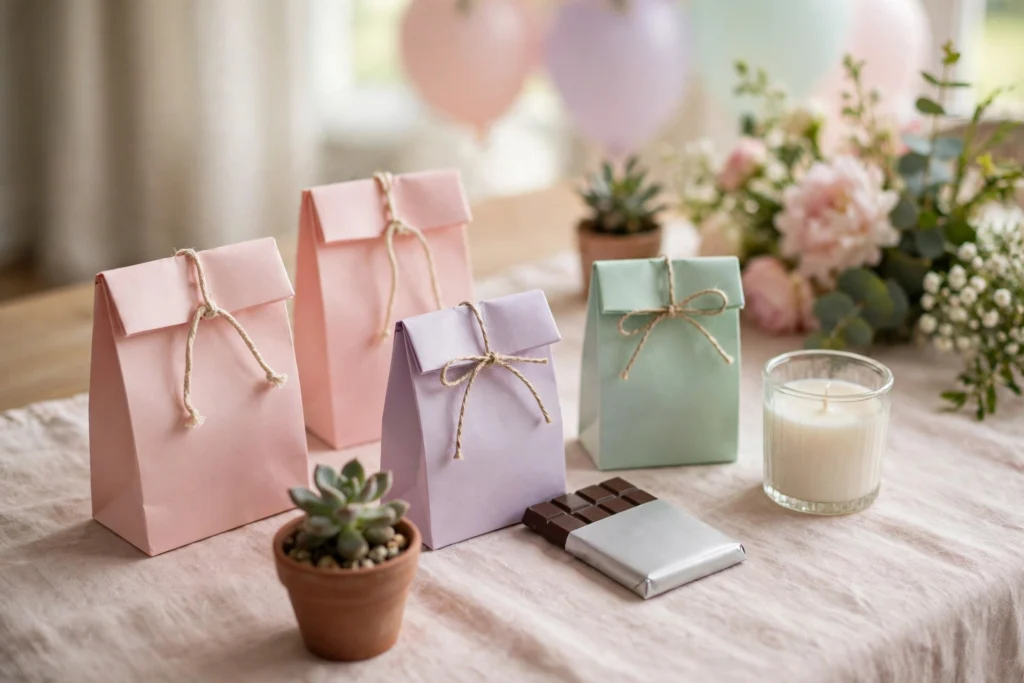
Prizes are the smallest part of the game and the easiest to get wrong. Choose prizes guests without children would want too — half the room may not have kids, and a set of nappies is a strange reward for winning. Small and useful beats novelty: a candle, good chocolate, a coffee gift card, a pretty notebook, or a small potted plant. Roughly $5 to $15 per winner is plenty.
For a team game, make the prize divisible: a winning team of four needs four small prizes, not one large one to argue over — buy one extra bag in case two teams tie. Present it with a little ceremony: announce the winning team by name, read the final scores, hand over the prizes, and take a photo. Match the prize to the theme — a safari-jungle baby shower theme pairs well with small animal-print notebooks, while budget-friendly baby shower decorations leave more room for nicer prizes. A group baby shower gift or best baby shower gift basket also works as a grand prize.
Adapting the Game for a Mixed Crowd
Every baby shower is a mixed crowd: grandparents and teenagers, parents and people without children, close family and coworkers who have just met. A game that only rewards parenting knowledge quietly excludes half the room, so include at least one round with nothing to do with babies — general knowledge, music, films, or food.
For co-ed showers, avoid questions that assume knowledge by gender, and split couples across teams — it stops one team dominating and gets people talking to someone new. For showers with children, add a short picture round — baby animals or famous storybook covers. For older guests, print questions in a large, clear font and read each one aloud twice, slowly. For a virtual shower, keep it to two rounds of five, with answers typed into the chat. And always offer a graceful pass: any guest may skip a question without explaining why.
If every question is about nappies and milestones, guests without children will stop trying by round two. Count your questions before the shower: if more than half need parenting experience, swap some out for general knowledge and questions about the parents.

Your Day-Of Host Checklist
The morning of the shower, run through this list: one answer sheet per team, plus two spares; the answer key for yourself only, on a separate sheet; pens — one per team, plus spares; a charged phone or kitchen timer; the scoreboard set up where every team can see it, with a working marker; prizes in a bag by your chair, with one spare bag; and the tiebreaker written on the back of your answer key.
Place the game in the flow of the day: guests arrive and mingle, food is served, trivia plays while everyone is seated and relaxed, then gifts are opened. Check how to plan a baby shower and the baby shower planning checklist for hosts to fit the game into the schedule, and how much does a baby shower cost for the budget — all figures there are ranges, and prices vary by US region and retailer.

Frequently Asked Questions
How many questions should a baby shower trivia game have?
Ten to 15 questions, in two or three short rounds over 10 to 20 minutes. Fewer than 10 ends before the room warms up; more than 20 makes attention drift.
How long should a baby shower trivia game last?
About 15 to 20 minutes, including the reveals. Allow roughly 45 seconds to one minute per question — reading, discussion, and the reveal with a fun fact. Schedule it after food and before gifts, when guests are settled.
How do you score a baby shower trivia game?
One point per correct answer, with a running total on a visible scoreboard. Never deduct points for wrong answers — it punishes guessing and silences the room. For a tie, use a numeric “closest guess wins” tiebreaker prepared in advance.
What are good prizes for a baby shower trivia game?
Small, useful things any guest would want: a candle, good chocolate, a coffee gift card, a pretty notebook, or a small potted plant. Roughly $5 to $15 per winner is plenty — prices vary by US region and retailer. For a team win, give every member a small prize.
How do you make baby shower trivia fun for guests who do not have kids?
Mix the categories so parenting knowledge is not the only route to a point — add general knowledge, music, film, and personal questions about the parents. Offer multiple choice on hard questions, play in mixed teams of three or four, and include one round with nothing to do with babies.
Final Thought
A baby shower trivia game does not need clever questions, expensive props, or a professional host. It needs a clear format, 10 to 15 fair questions in short rounds, mixed teams of three or four, simple visible scoring, and a small prize worth winning. Get those five things right and the game runs itself. Write your questions this week, test them on one honest friend, and pack your host kit the night before.