Digital vs. Printed Baby Shower Invitations: Which Is Better?
Direct answer: Neither digital nor printed baby shower invitations is better for everyone. Digital invitations win on speed, cost, and RSVP tracking, and they suit large or far-flung guest lists. Printed invitations win on formality, keepsake value, and guests who prefer paper or do not use email often. For most US showers, the best choice is the format your guests will actually read and reply to — and a hybrid mix often beats choosing just one.
The quick comparison
If you only have a minute, this table gives the honest trade-off. The rest of the article explains when each row matters most, because a small local shower and a large family celebration do not have the same priorities.
| Factor | Digital invitations | Printed invitations |
|---|---|---|
| Speed | Instant delivery, easy last-minute fixes | Days for printing and mailing, plus delivery time |
| Cost | Usually lower; no printing or postage for the main send | Higher; printing, envelopes, and postage add up, and costs vary by US region |
| RSVP tracking | Automatic replies, reminders, and headcounts | Manual tracking, unless you add a reply card or online link |
| Keepsake value | Lower, though guests can save a screenshot | High; guests can display it, file it, or keep it in a baby book |
| Formality | Can look polished, but may feel casual | Naturally formal and ceremonial |
| Editing after sending | Easy to correct a time or link | Costly; reprints may be needed for major errors |
| Environmental impact | No paper, though devices and servers still use energy | Paper use, reduced with recycled stock and smaller print runs |
| Risk of being missed | Can land in spam or be buried in messages | Can be lost in mail, but rarely ignored once opened |
Digital baby shower invitations: strengths
Digital invitations are fast in a way paper cannot match. You can design, proof, and send an invitation in an evening, correct a venue address the next morning, and watch RSVPs arrive without waiting for mail. That speed is a real advantage when a shower date moves, a venue changes, or invitations go out later than planned.
They are also easier for guests to act on. A tap can open a map, add the date to a calendar, follow a registry link, and submit an RSVP in under a minute. For guests travelling from another state, that convenience matters: they can check travel details, reply, and ask questions from the same message thread.
Cost is the other clear win. Digital invitations avoid printing and postage for the main send, which helps when the guest list is large or the overall shower budget is tight. That saving can go toward food, decorations, or a better venue instead — though hosts should still check whether a platform charges for premium designs or larger sends, since “free” and “low-cost” are not the same thing everywhere.
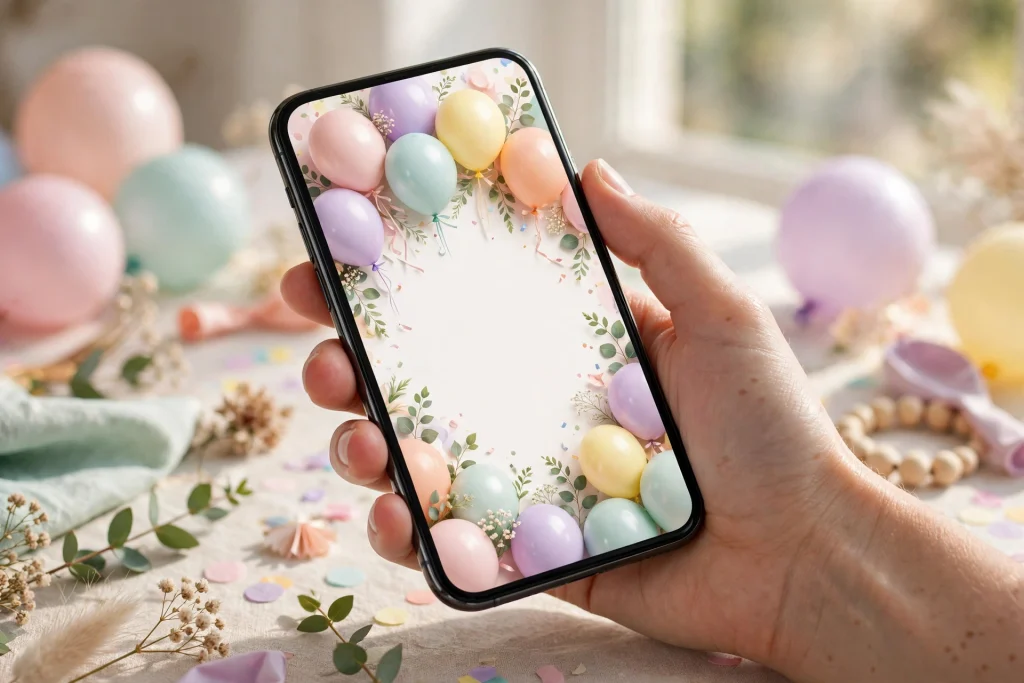
Email works for most guests, but a text or direct message may reach younger relatives and friends faster. Whatever you choose, send the invitation privately to named guests — never only as a public social media post, where guests cannot tell if they are included.
Digital invitations: weaknesses to plan around
Digital invitations have one stubborn weakness: they can be missed. An invitation can land in a spam folder, get buried under work emails, or be swiped past in a busy group chat. Older guests may also struggle with a link, a password, or a platform that requires an account to view details.
They can also feel less special if they look rushed. A plain text message with a date and address is technically an invitation, but it does not set the tone for a celebration. Take the same care with a digital design as you would with paper: a clear headline, readable fonts, a beautiful image, and every essential detail on the first screen.
Privacy deserves attention too. Do not post a home address, a registry link, or a baby shower photo publicly to promote a digital invitation. Keep the details in a private message or a password-protected page, and ask guests not to forward the link beyond the guest list.
Printed baby shower invitations: strengths
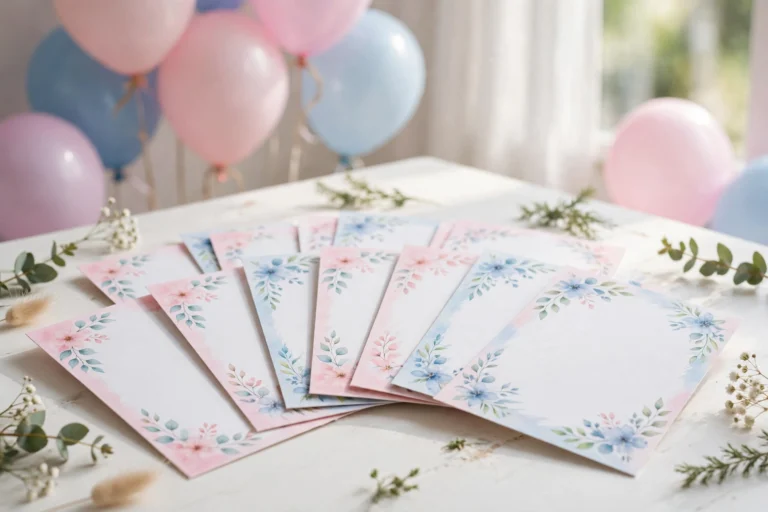
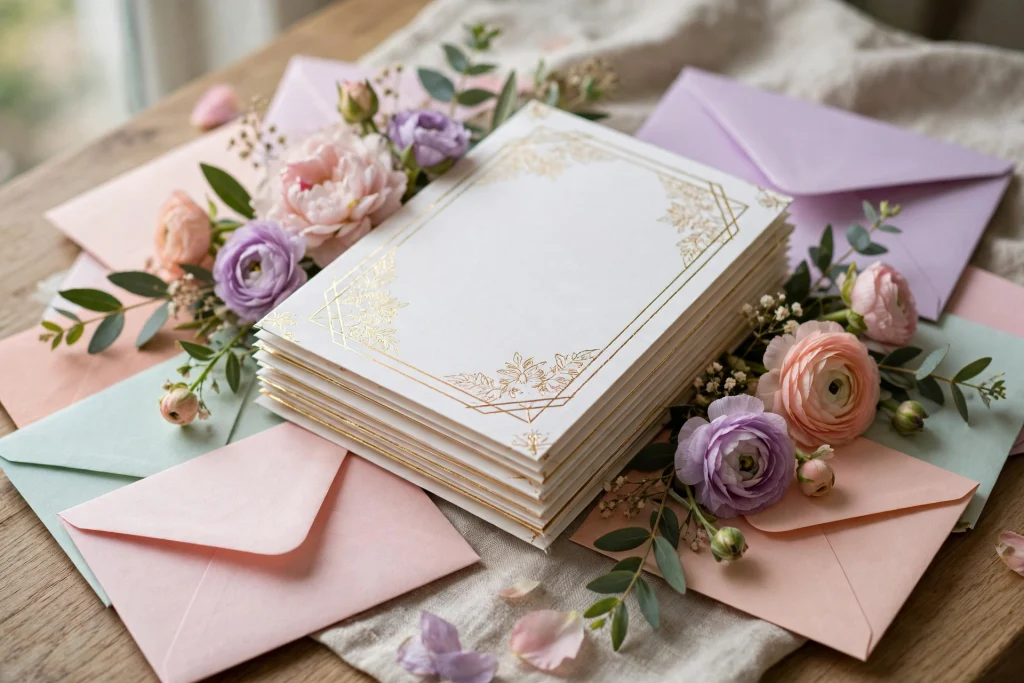
Printed invitations carry a feeling that a screen cannot quite copy. The paper, the envelope, the handwriting or printed name, and the act of opening it all signal that this celebration matters. For formal showers, milestone first babies, and families who treasure keepsakes, that feeling is often worth the extra cost and time.
They are also more forgiving for guests who do not live on email. Grandparents, older relatives, and guests with limited internet access can read a printed card at their own pace, put it on the refrigerator as a reminder, and reply by phone without learning a new tool. In a mixed-age guest list, paper can actually increase replies rather than reduce them.
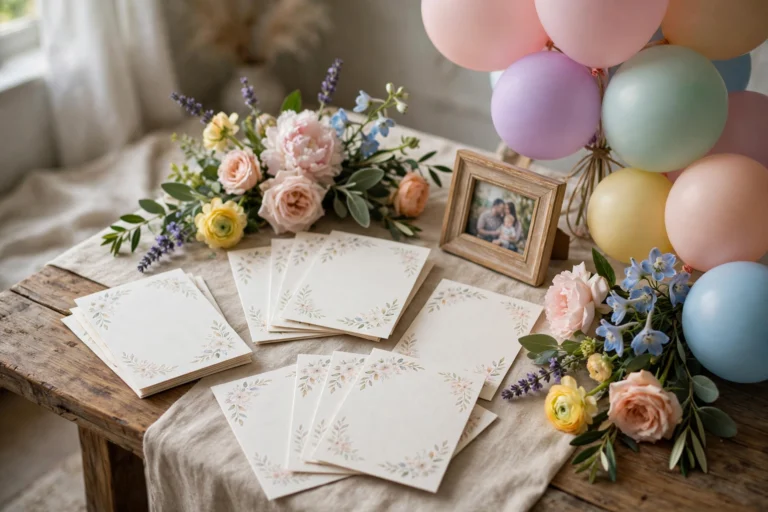
Printed invitations can double as decoration and memory. Guests often display them before the shower and keep them afterwards, and the parents-to-be may add one to a baby book. A well-designed printed invitation therefore keeps working long after the party ends.
Printed invitations: weaknesses to plan around
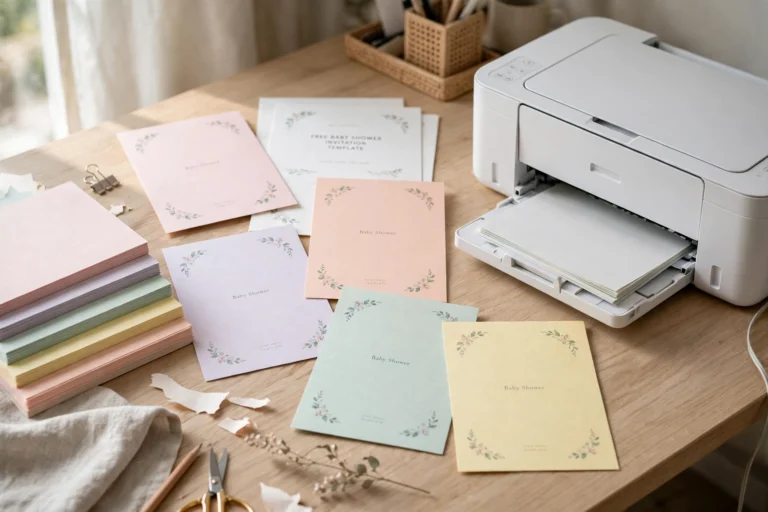
The main weaknesses of printed invitations are time and cost. Designing, proofing, printing, addressing, and mailing takes weeks, not hours, and every correction after printing costs money or time. Hosts who order printed invitations should therefore build in a buffer: order early, proof carefully, and order a few extras for mistakes, late additions, and keepsakes.
Cost also scales with the guest list. Printing, envelopes, and postage multiply with every guest, and premium paper, foil, or special finishes raise the total further. Prices vary widely by US region and by printer, so compare a small number of clear quotes rather than assuming one online price applies everywhere.
Finally, tracking RSVPs takes manual work. A reply card with a pre-addressed envelope helps, as does adding a phone number, email, or simple online RSVP link to the card. Without one of those, the host will spend the final weeks chasing replies by phone and message.
Order one printed proof, or print one copy at home at actual size, before ordering the full run. Check every name, date, time, address, and RSVP detail, and ask one other person to proofread too. A typo on fifty printed cards is a far bigger problem than a typo you can fix in a digital draft.
Which format fits which shower?
Use this decision guide rather than a single rule. Match the format to your guests, your timeline, and your budget — not to what you think a “proper” shower should look like.
- Choose digital when the guest list is large, guests live far apart, the timeline is short, the budget is tight, or RSVP tracking matters most.
- Choose printed when the shower is formal, the guest list is small, many guests prefer paper, or a keepsake matters to the family.
- Choose hybrid when the guest list is mixed in age or tech comfort, or when you want a keepsake for close family and speed for everyone else.
- Choose printed for the parents-to-be even for a digital shower, so they have a beautiful card to keep.
For wording that works in either format, see our baby shower invitation wording examples and the etiquette rules in baby shower invitation etiquette.
The hybrid approach, done well
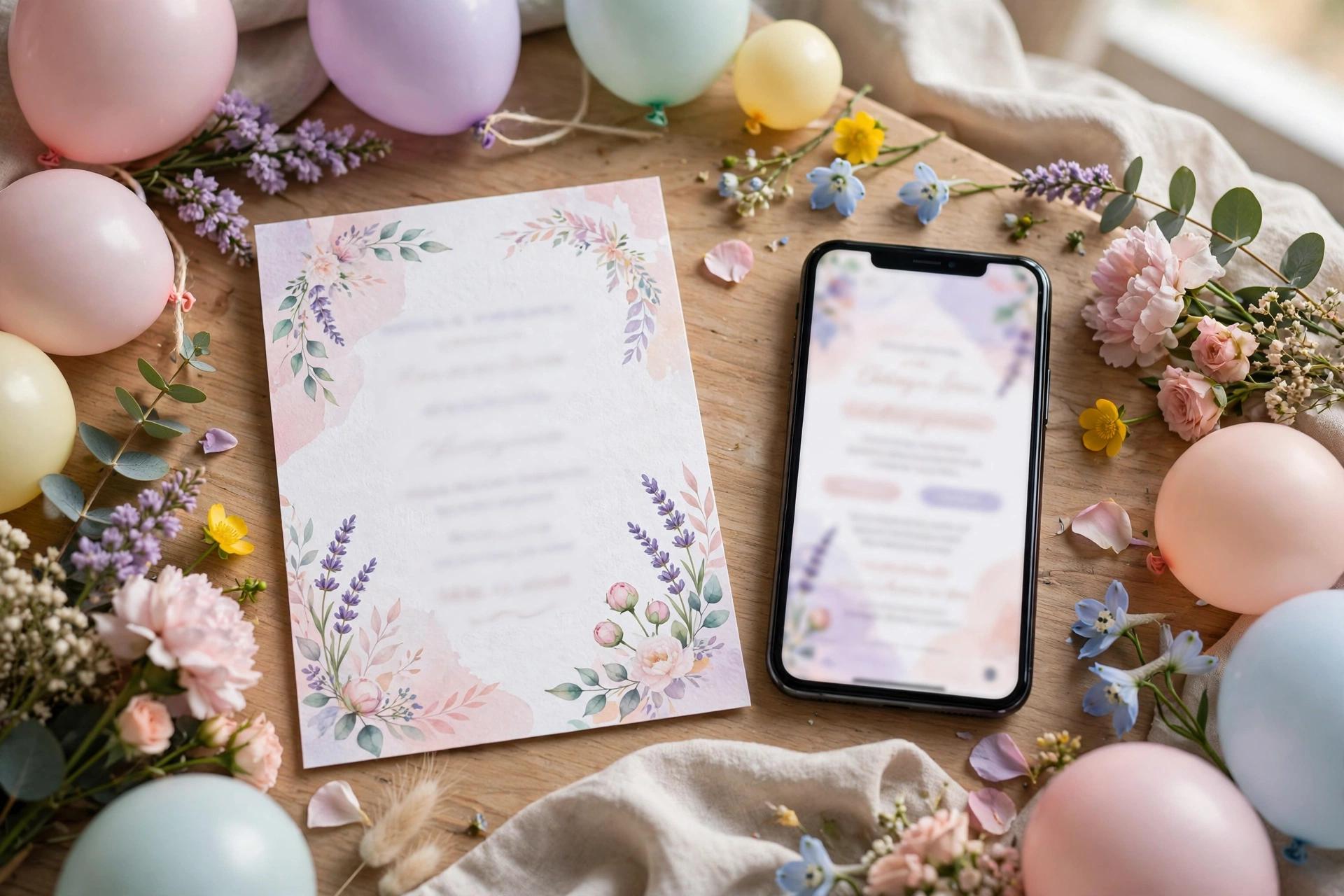
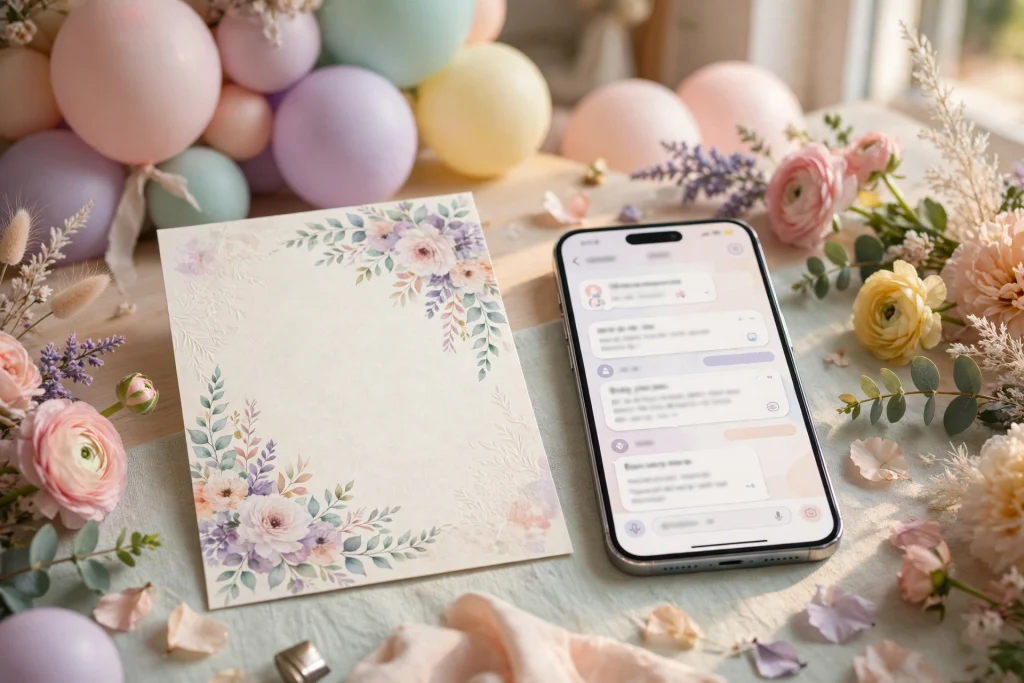
A hybrid invitation plan is not a compromise that pleases nobody. Done well, it gives each guest the format they are most likely to read. A common plan is digital invitations for most guests, printed invitations for older relatives, close family, and anyone who asked for paper, plus one printed keepsake for the parents-to-be.
Keep the design consistent across both formats so guests recognise the same shower. Use the same colours, headline, and wording, and the same RSVP deadline and contact. If the printed card and the digital version disagree on a time or address, guests will trust whichever they saw first — and the host will spend days correcting the confusion.
Write every detail once — date, times, address, RSVP contact and deadline, registry note — and copy it into both formats from that sheet. Never retype details from memory for the second format. That single habit prevents almost every digital-versus-printed mismatch.
Cost, timing, and environment in plain terms
Digital invitations are generally the lower-cost option, because they avoid printing and postage, but premium templates, animations, or larger sends can still cost money. Printed invitations vary the most: simple home-printed cards can be affordable, while professionally printed cards with premium finishes cost more per guest, and postage adds a further per-guest cost that varies by US region and weight.
Timing follows the same pattern. Digital invitations can go out three to four weeks before a shower and still work well, though four to six weeks remains the safer window for guests who need travel time. Printed invitations need the full four-to-six-week window, plus printing and mailing time before that, so start earlier. Full timing guidance is in when to send baby shower invitations.

How to make either format feel personal
Personal touches matter more than format. Add the parents-to-be’s names prominently, use a photo or illustration that matches the shower theme, and write a warm opening line rather than a bare list of facts. For printed cards, a short handwritten note on a few close-family cards adds warmth. For digital cards, a personal message with the send — not just a forwarded link — does the same job.

Decision checklist
- ☐ Who is on the guest list, and how comfortable are they with email and links?
- ☐ How many weeks are left before the shower?
- ☐ What does the invitation budget allow, including postage for printed cards?
- ☐ Is a keepsake important to the parents-to-be or close family?
- ☐ Can one person track RSVPs, or would automatic tracking help?
- ☐ Would a hybrid mix reach more guests than either format alone?
- ☐ Have you proofread both formats from the same master details sheet?
If you answer those questions honestly, the “better” format usually chooses itself — and it may be different for your shower than for someone else’s, which is exactly as it should be. Once the format is settled, fit it into the wider plan with our complete baby shower planning checklist for hosts.
Frequently asked questions
Are digital baby shower invitations acceptable?
Yes. Digital invitations are widely accepted in the US for baby showers of every formality level, provided they include every essential detail, are sent privately to named guests, and are easy to read on a phone.
Do printed baby shower invitations get more RSVPs?
Not automatically. Printed invitations can help guests who prefer paper or do not use email often, but digital invitations often get faster replies because replying takes one tap. The best RSVP rate comes from choosing the format each guest will actually see.
How much do baby shower invitations cost?
Costs vary widely by US region, guest count, paper, and design. Digital invitations are generally lower-cost because they avoid printing and postage, while printed invitations add per-guest printing and postage costs. Get a clear quote for your exact guest count before deciding.
Can I send digital invitations to some guests and printed to others?
Yes, and this hybrid approach is often the kindest choice for a mixed-age guest list. Keep the design, wording, RSVP deadline, and details identical across both formats to avoid confusion.
Is it tacky to send a baby shower invitation by text message?
A thoughtful, well-designed invitation sent by text or direct message is not tacky. A bare, rushed text with missing details can feel careless, so include the full invitation design or a complete message with every essential detail.
Should I still send a printed invitation to the parents-to-be if everyone else is digital?
It is a lovely touch. A printed keepsake gives the parents-to-be something to hold, display, and add to a baby book, even when the main send is digital.